Peptide Pureness Evaluation Solution
Just How To Check Out A Peptide Purity Examination: Hplc, Mass Spectrometry And Coa Analysis For Uk Researchers 2026
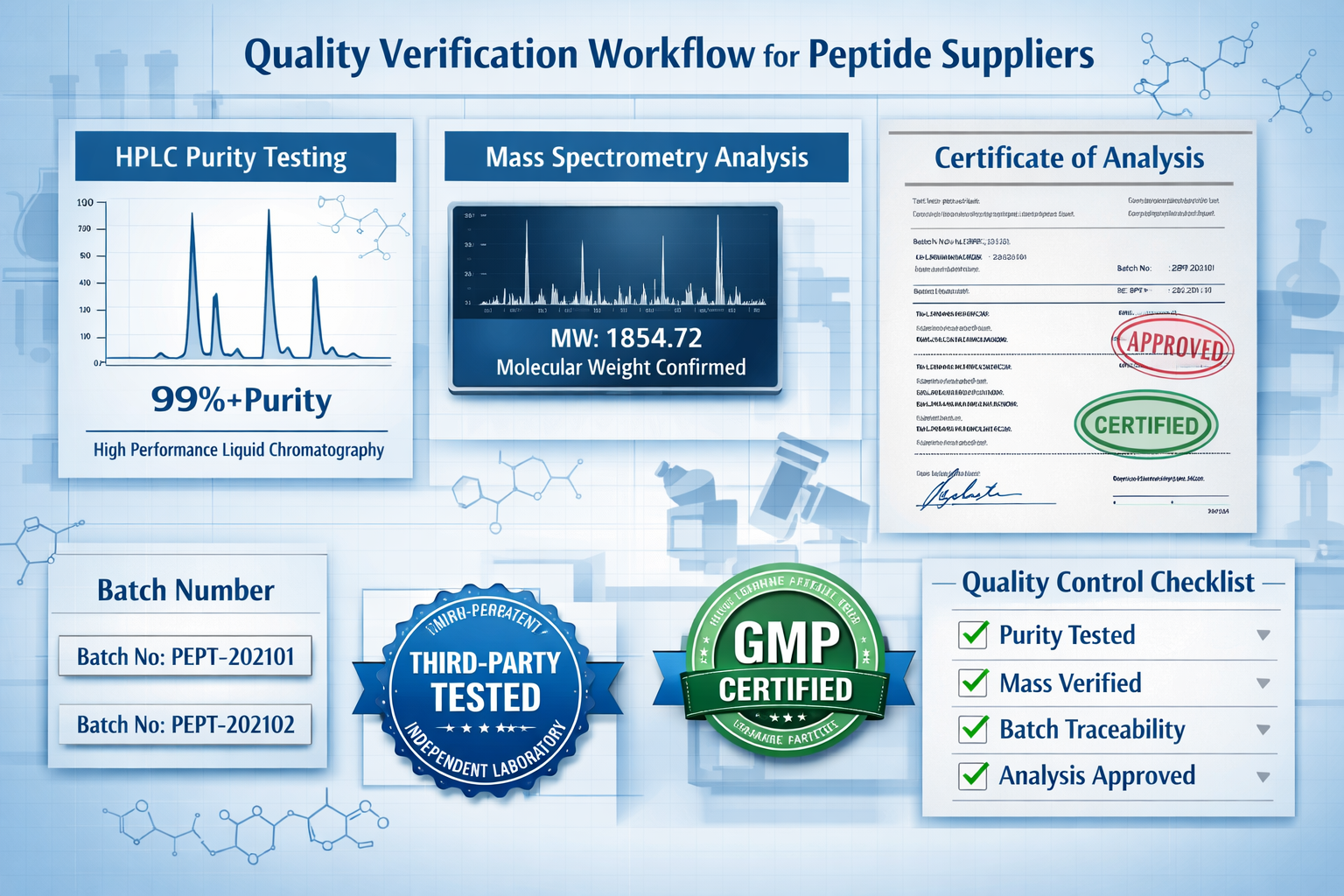
In vivo examinations evaluate absorption, distribution, metabolism, and discharging (ADME) qualities, further verifying effectiveness and security. These testing solutions not just help clients enhance items exactly throughout growth but also offer strong data sustain for governing compliance of peptide formulations. Beware of COAs that offer a purity number with no supporting chromatographic information, record pureness without specifying the logical technique, or listing a molecular weight without mass spectrometry verification. Tandem mass spectrometry (MS/MS or MS ²) pieces the peptide ions in the gas phase and evaluations the piece masses. This is the gold standard for peptide identity-- it verifies both the structure and the sequence. For several peptide projects, absolute peptide quantity matters as much as chromatographic pureness.
By insisting on peptides that feature verification of pureness and identity, scientists can greatly reduce the threat of experimental artefacts. On the other hand, utilizing peptides that have passed third-party lab validation aids guarantee that the observed experimental results are absolutely due to the desired peptide and not as a result of impurities or mistakes. When you see peptides promoted as "research-grade," it refers to their meant usage and the level of manufacturing oversight. Research-grade peptides are created research laboratory research use only-- they are not generated under pharmaceutical GMP criteria and are not meant for use as rehabs or in people. These peptides come with a standard quality control package, generally consisting of HPLC purity analysis and MS confirmation of identification, ensuring they meet clinical standards for purity and structure.Quality Assurance And Product Conformity In The Pharmaceutical Market
At Maxed Out Substances, every product we provide includes a clear screening record and transparent documentation. Our mission is to sustain scientists with high-purity, validated compounds that fulfill the needs of contemporary clinical research-- absolutely nothing more, nothing much less. Independent, third-party screening plays a necessary duty in guaranteeing neutrality and precision. By utilizing external labs for verification, vendors eliminate predisposition and promote scientific integrity. It's an added step that offers researchers confidence that each peptide meets constant, proven standards. This quality fits the majority of in vitro study applications-- receptor binding assays, enzyme activity research studies, and cell society experiments.Pinnacle Lab Editorial Group
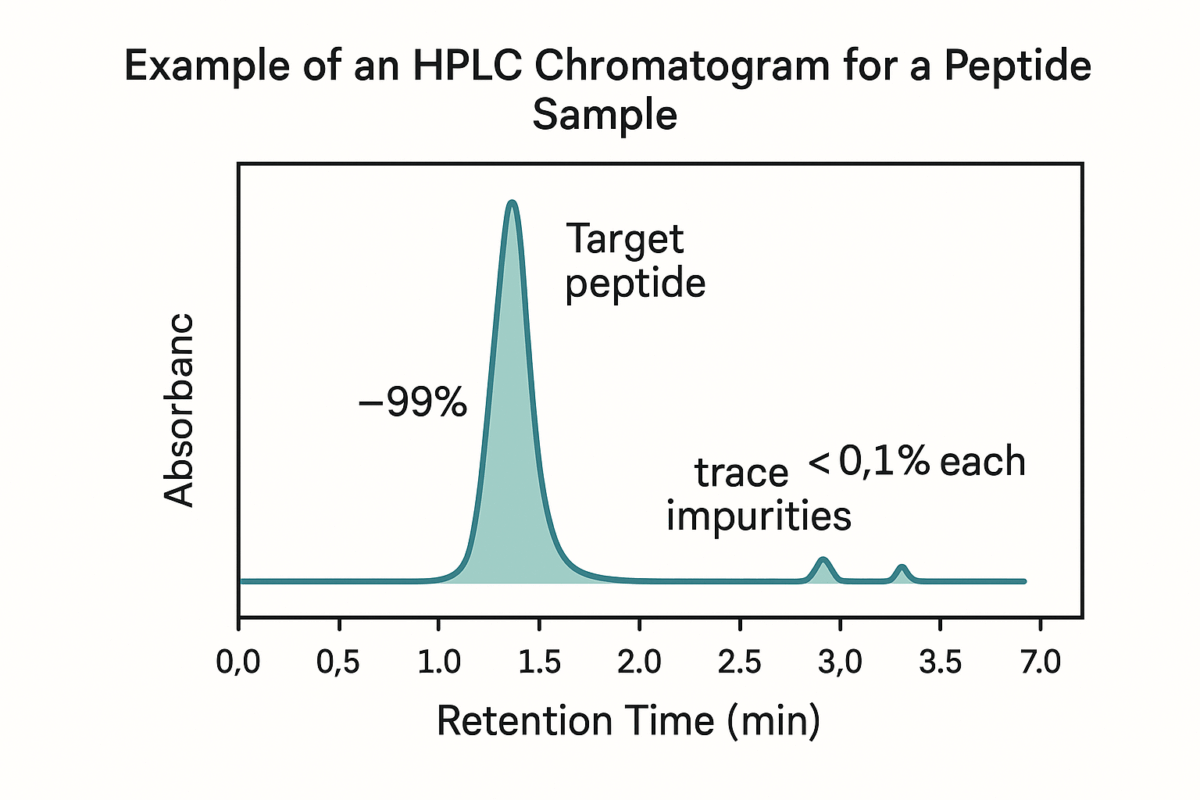
Various other techniques like electrophoresis, capillary electrophoresis (CE), and nuclear magnetic vibration (NMR) can additionally be used to analyze peptide structure, charge, and pureness, guaranteeing detailed characterization. In COA evaluation, it typically includes HPLC pureness screening, mass spectrometry identification verification, and batch-specific paperwork revealing the checked lot, approach, results, and date. For peptide purity testing, reverse-phase HPLC is the standard theoretical design. The chromatographic pureness is after that calculated by contrasting the area Premium Peptides under the primary optimal with the total location under all incorporated heights.
It is an area-percent pureness measurement, not a total identification or activity examination. Notably, purity percentages explain chemical composition just-- they do not suggest sterility or organic suitability. Peptides from Maxed Out Substances are provided exclusively for lab study use and are not intended for human or veterinary purposes. Peptide purity is generally expressed as a portion, such as 95% or 98%. This number stands for just how much of the sample is composed of the desired peptide sequence. For many research laboratory applications, a pureness of 95% or greater is thought about research-grade.
Precision Testing For Pureness, Potency, And Efficiency
- The friend web page on why 99 percent purity issues describes why small pollutant percents can still matter in sensitive in-vitro assays.
- Alternatively, making use of peptides that have actually passed third-party laboratory validation helps ensure that the observed speculative results are absolutely as a result of the desired peptide and not as a result of contaminants or mistakes.
- These numbers obtain thrown around so frequently that it's simple to play down them-- just an additional spec on a product page.
- HPLC-tested suggests the example was run through high-performance fluid chromatography to divide the target peptide from impurities.